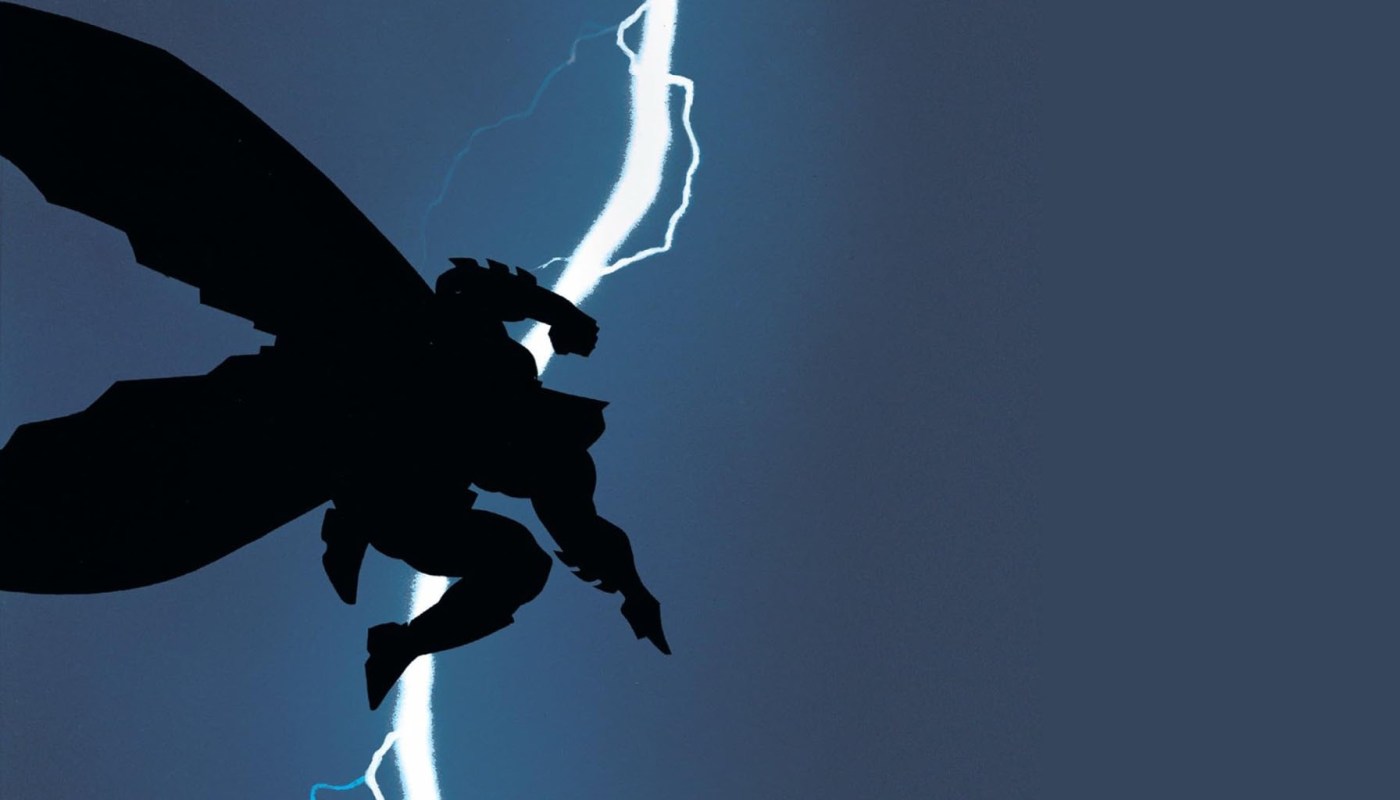
Before The Dark Knight Returns, Batman was already a legend—but he wasn’t mine yet.
It was 1986.
I was a kid in the Bronx, small, awkward, geeky, angry in ways I didn’t fully understand. I wasn’t looking for justice in a cape—I was looking for control. For power. For someone who had been broken and chose to come back anyway.
I found it in a comic book. The Dark Knight Returns, by Frank Miller
It wasn’t just a new version of Batman—it was a new language for pain. It was messy, violent, relentless. It showed me that fear could be turned into a weapon. That being powerless didn’t have to mean being helpless. That maybe the best way to fight back wasn’t with superpowers—but with rage, planning, and a refusal to stay down.
It was Batman as I needed him: older, meaner, mythic.
And from that point on, the game changed…
Before Frank Miller, Batman was still living in the long shadow of his campier past. The Adam West era had left its mark—fun, iconic, unforgettable—but it painted Batman with a lighter brush. Even in the comics, he was mostly a brilliant detective in a cape, solving themed crimes and outsmarting villains.
Smart? Absolutely. Capable? No question.
But dangerous? Mythic?
Not yet.
Then The Dark Knight Returns showed up—and everything changed.
The Dark Knight Descends
The Dark Knight Returns dropped like a smoke bomb in a mall food court. Gotham was a dystopian mess. The media was pure noise. The cops were a joke. And Batman? He was retired, bitter, and filled with regret. But he came back.
And when he came back, he came back hard.
“This isn’t a mudhole. It’s an operating table. And I’m the surgeon.”
He wasn’t fighting criminals. He was fighting the entire system. He was taking on the media, the government, even Superman. And he wasn’t doing it with gadgets and quips—he was doing it with pain, planning, and the kind of cold resolve you don’t get from a spider bite.
This wasn’t your dad’s Batman. This was ours.
Tracing Covers, Not Just Art
I couldn’t afford posters. What I had was printer paper, a mechanical pencil, and a copy of The Dark Knight Returns so beat up it looked like it had been in a fight with Batman himself.
So I traced the covers.
Not to be an artist. Just to have them. To own them, in the only way I could. That lightning-strike silhouette became my bedroom’s north star. Not because I liked how it looked—but because I needed what it represented.
A man. A human. No powers. Just prep time, rage, and a refusal to back down. And he beat Superman.
That mattered to a kid like me. Still does.
Gotham Was My Schoolyard: The Nerd’s Survival Fantasy
For a lot of us Gen X kids, Gotham didn’t look like some distant comic book city. It looked like our schoolyards. Our neighborhoods. Our blocks. Places where the rules didn’t matter if no one enforced them. Where the system didn’t protect you. Where the biggest, meanest kid set the tone—and everyone else learned to navigate around him.

That’s what The Dark Knight Returns tapped into. Gotham was a metaphor. For the chaos of growing up. For feeling small in a world that didn’t care about fairness. And Batman? He wasn’t a superhero. He was a strategy.
As a small, broke, nerdy Puerto Rican kid in the Bronx, I didn’t fantasize about flying. I fantasized about winning. Outsmarting. Outlasting. I didn’t want to be the strongest guy in the room—I wanted to be the one nobody saw coming. The one who’d had enough.
That was Batman.
Especially this Batman. He wasn’t born powerful. He didn’t have gifts from other planets or radioactive accidents. He had pain. He had will. He had prep time. He was mortal in a world of gods, and still walked into the fire.
“You don’t get it, son. This isn’t a mudhole. It’s an operating table. And I’m the surgeon.”
That line wasn’t just brutal—it was a schoolyard fantasy. Every kid who got pushed around, ignored, laughed at for being too smart, too weird, too soft—that line was for us. The fight with the Mutant Leader wasn’t just a boss battle—it was every showdown with a bully we’d ever dreamed of winning.
Batman doesn’t beat him the first time. He gets wrecked. But he learns. He adapts. He sets the stage. And when they fight again, he doesn’t just win—he sends a message. That you don’t need to be the strongest. You just need to be prepared.
And then there’s the Superman fight.
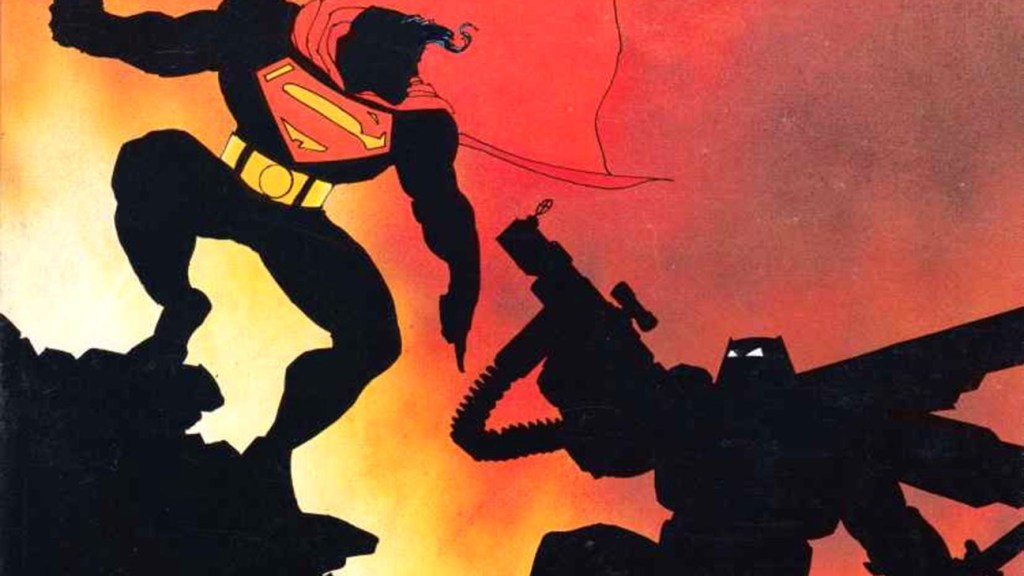
“You sold us out, Clark… You gave them the power that should’ve been ours.”
That wasn’t just about government overreach. That was every nerd standing up to the golden boys. The beautiful people. The quarterback class presidents who smiled for the yearbook while stepping over the rest of us. Batman punching Superman wasn’t about kryptonite—it was about every kid who wanted to show the world they mattered, even if they didn’t look the part.
That’s why The Dark Knight Returns hit like it did. Not just because it was edgy. But because it told kids like us: You’re not powerless. You’re just underestimated. And that might be the most dangerous thing of all.
Frank Before the Fall (And the Road to Film)
This was Frank Miller before his spiral. Before All-Star Batman turned him into a self-parody. Before the libertarian ranting and dead-eyed monologues. In The Dark Knight Returns, he was still writing from the gut—not the ego.
And it showed. It was angry, but smart. Nihilistic, but disciplined. And most of all, it was quotable:
• “This isn’t a costume. It’s a uniform.”
• “You don’t get it, son. This isn’t a mudhole.”
• “We are the law. We are the law.”
And even though it defined Batman for a generation, we wouldn’t see that version on screen for years.
Burton gave us a start—gothic mood, broken psyche, some trauma under the cowl. But it wasn’t until Nolan came along that we saw a Batman shaped by strategy, paranoia, and generational trauma. Even Snyder’s bulked-out, rage-fueled version was pulling straight from Miller’s playbook.
Miller didn’t just inspire Batman on film—he infected it.
Final Thoughts: He’s Still In There
I still see him sometimes—that Batman.
Not the billionaire ninja. Not the brand. Not the toy line.
The Dark Knight. The old man who came back when the world told him not to. Who outlasted gods, outmaneuvered systems, and reminded us that fear, when harnessed, could be useful.
And honestly? He reminds me of us now.
Old. Crotchety. Back hurts. Cynical as hell. Doesn’t trust anyone in charge, but still gets up and fights anyway. Yeah. That’s Gen X Batman. That’s our Batman.
That Batman raised me.
And now he kinda is me.
And I’m not the only one.
Thanks for reading.
Really into nerdy Vigilante shit? Me too!
Discover more from Genex Geek
Subscribe to get the latest posts sent to your email.
 Genex Geek
Comment like it’s a middle school slam book, but nicer.