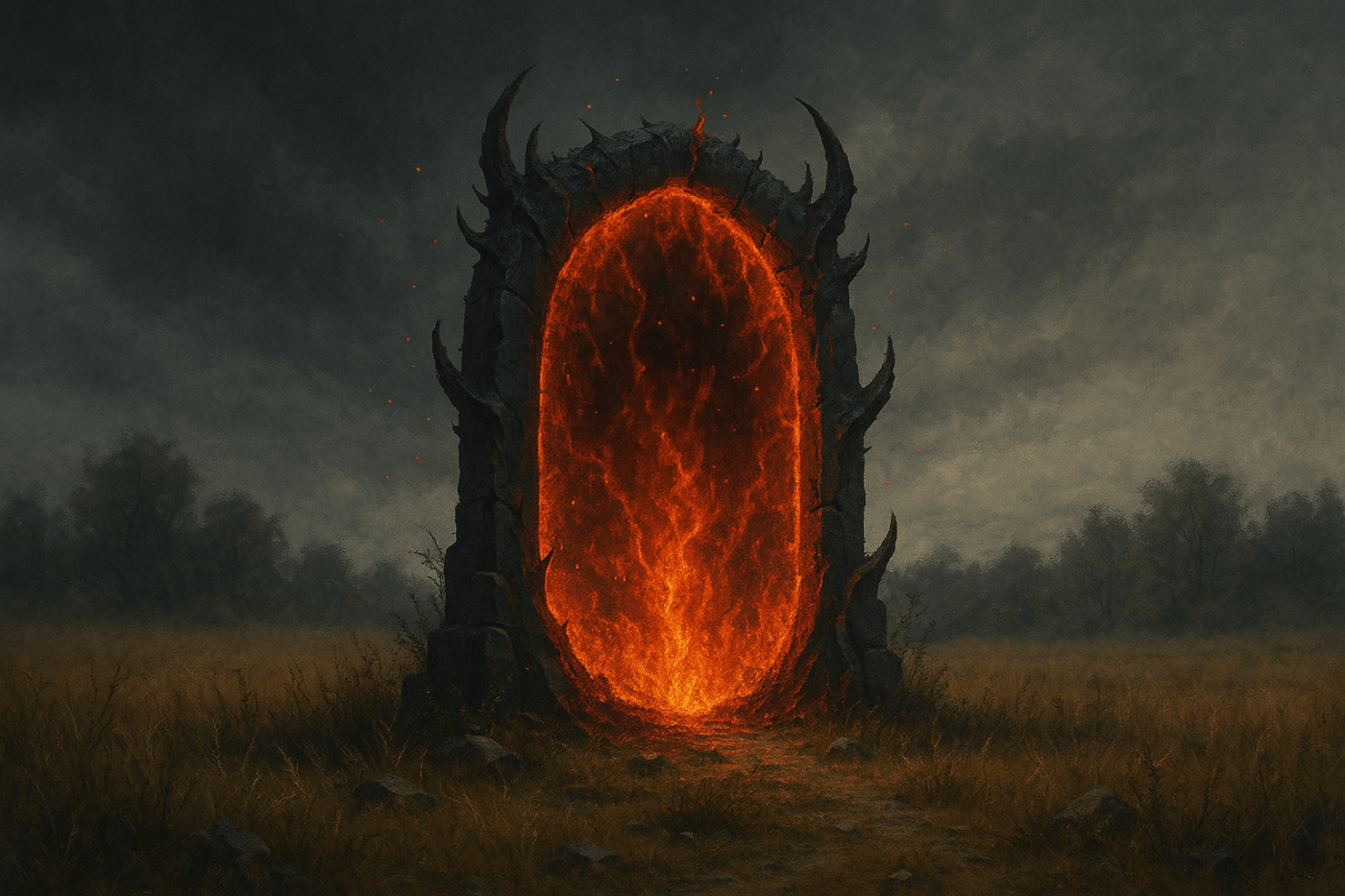
They dropped Oblivion Remastered yesterday, and like a good little nostalgic junkie, I downloaded it instantly. I’m already knee-deep in Cyrodiil again, and it’s hitting harder than I expected. The visuals are richer. The lighting breathes. It’s darker now, moodier than the candy-colored dreamscape I remember, but it still feels like Oblivion. Just sharper. Like someone polished your childhood and left the fingerprints intact.
This was the first game that broke me past the 100-hour mark. It stole whole seasons from me, and I gave them up gladly. Because it gave me something back. It handed me the kind of fantasy immersion I hadn’t felt since opening HeroQuest or scribbling half-finished D&D campaigns on lined paper. But now I didn’t need dice. Or a DM. Just time. And back then, I had a mountain of it.
The remaster brings it all back. That moment stepping out of the sewer into sunlight? Still magic. The world just waiting to be explored, broken, saved, or ignored entirely. It’s a little clunky, sure. But the kind of clunky that reminds you it was built with love. Not streamlined. Not on rails. Just a beautiful, slightly off-kilter dream you get to live in again.
The Beauty of the Broken
Gone now, well, mostly, are those big balloon-shaped moon faces from the original. Everyone used to look like they’d been built from two potatoes and a mirror. Now they’ve got structure. Cheekbones. Some actual facial variety. But thankfully, they kept the voices. The same offbeat line reads. The same awkward rhythm. The same warmth that made the world feel like it was full of weird, lovable strangers instead of polished, forgettable NPCs.
That was the thing about Oblivion. It didn’t try to be cool. It didn’t chase realism. It just dropped you into a world where things happened. Random. Chaotic. Magical. Bandits wearing high-tier gear way too early. Townsfolk accusing each other of onion-based conspiracies. Deadpan guards yelling about criminal scum while standing next to a decapitated deer you definitely didn’t kill.
This remaster smooths out just enough to feel modern, but not so much that it forgets what it was. It’s still odd. Still unpredictable. Still capable of surprising you.
This Wasn’t Skyrim. And That Was the Point
Look, I love Skyrim. We all do. It’s the golden child. The rockstar. The one that shows up to every console party wearing new armor and selling more copies. But Oblivion? That was the one with a cigarette behind its ear, a weird glint in its eye, and a half-finished side quest it forgot to mark on your map.
The mythology felt deeper somehow. More dangerous. The gods were moody and hands-on. The Daedric Princes weren’t just symbols, they were characters who could ruin your life or gift you something unholy just for making them laugh. The world didn’t exist to serve your story. It existed on its own terms – and you just happened to be in it.
And if you were in the know, you hunted Umbra early. That sword was legend. You saved outside her shack like a coward, lured her into terrain glitches, or prayed for critical strikes. If you pulled it off, you were unstoppable. A god with a bad haircut and leather greaves. The game didn’t care about balance. It handed you power and asked if you were smart enough to break everything with it.
That’s the soul of Oblivion. It wasn’t fair. It wasn’t neat. It was a sprawl of systems duct-taped together by lore and sheer ambition. And when it clicked, it wasn’t just a game – it was a second life.
Oblivion Was My Gateway Drug
Before Oblivion, I didn’t think of myself as a “Bethesda guy.” I skipped Morrowind. I knew it existed, but it looked dense. Brutal. Probably something I’d get around to “one day.” That day never came, because Oblivion showed up first and made me care.
And that game didn’t just open the door to Tamriel. It cracked something bigger open. Years later, it was Fallout 4 that pulled me back in. And yeah, that wasteland grind hits differently, but it’s cut from the same cloth. The same wandering. The same freedom. The same long nights looting ruins and accidentally triggering story missions you weren’t emotionally ready for.
I learned how to play Bethesda games through Oblivion. And I’ve been chasing that dragon ever since.
The Weirdos Who Made It Home
You can’t talk about Oblivion without tipping your helmet to the cast of characters who turned Cyrodiil into something unforgettable. Not just because they were well-written – some were barely written at all. But they stuck with us. Like NPC-shaped glitches in our emotional matrix.
The Adoring Fan? That little Bosmer gremlin with the highlighter hair and the world’s most punchable optimism? I spent days finding new cliffs to nudge him off of. He wasn’t just a companion. He was a pastime. A ritual. A sport. Every time I became Arena Champion again, I’d brace myself. “You’re the Grand Champion! This is the greatest day of my life!” Oh, buddy. Not for long.
And M’aiq the Liar – that glorious, fourth-wall-breaking Khajiit philosopher who knew more about the world (and the developers) than anyone had a right to. He’d show up in the middle of nowhere, drop a truth bomb about fast travel or horses, and disappear like a myth. I still remember the first time I found him. It was like meeting a cryptid who’d read the patch notes.
Then there was Lucien Lachance, who whispered his way into my Dark Brotherhood dreams. Smooth. Creepy. Charismatic in the way a velvet coffin is. You didn’t just want to join his murder cult , you wanted him to be proud of you. If you were a real sicko, you probably roleplayed your kills just to hear him say, “I see you have returned…” like you were coming home from war.
And now, with the remaster, we get to return to the Shivering Isles, the crown jewel of Oblivion’s madness. That expansion didn’t just break the rules. It pulled the game apart at the seams and reassembled it into something divine. Sheogorath wasn’t a side quest. He was an existential crisis in a kilt. That whole DLC felt like stepping into a fever dream directed by Monty Python and Daedric Lovecraft. Getting to revisit it now? That alone is worth the install.
These weren’t just characters. They were part of what made Oblivion feel alive. Unpredictable. Gloriously broken and totally yours.
Coming Home (and One Last Request)
Booting this remaster up didn’t feel like revisiting a game. It felt like coming home. A weird home, sure. One filled with bugged-out horses and guards with steel morals. But it’s home just the same.
I didn’t expect it to get me like this. But the second that music kicked in, I was back. The awkward charm. The unbalanced weapons. The weird side quests that start funny and end with cults. It’s all here again, and I’m grateful.
So Bethesda, thank you. Truly.
But please. Don’t stop here.
We’re older now. We’re patient. And we’re ready. So go on. Give Morrowind the same love. Let us walk through Seyda Neen in 4K. Let us fly again. Let us miss five swings in a row and still call it immersive.
Let us finish the journey where it all began.
Discover more from Genex Geek
Subscribe to get the latest posts sent to your email.
 Genex Geek
Comment like it’s a middle school slam book, but nicer.